Baby Panda's Daily Habits
BabyBusEducational
3.596.00 Reviews
- Version
- 8.76.00.00
- Installs
- 50.00M
- Age Rating
- Everyone
Screenshots
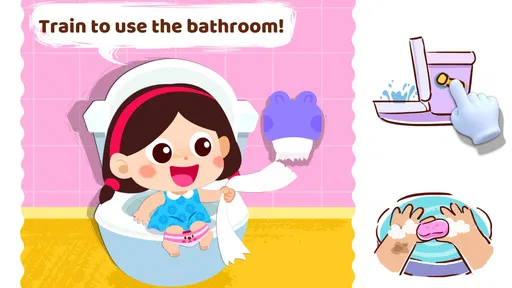
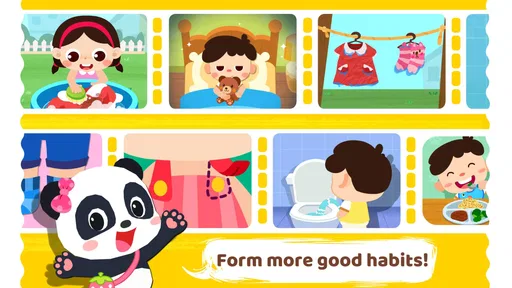
Our Review of Baby Panda's Daily Habits
 Analysis by Appyee
I found Baby Panda's Daily Habits to be a gentle educational game that works best when a child needs encouragement with ordinary routines rather than intense entertainment. It turns toilet training, brushing, washing, and other daily moments into simple activities with Baby Panda, making the subject feel less like an instruction from an adult and more like a small game to explore together.
My overall view is positive, but specific: this is a useful companion for parents of younger children, especially when a child responds better to pictures and repetition than to spoken reminders. It is not a complete parenting tool, and it will not replace patient supervision. Its value comes from making familiar routines easier to discuss, practise, and remember.
What the game is really good at
The game comes from BabyBus and sits in the educational game category. It is aimed at children from three to eight, with an Everyone content rating, so its tone is deliberately safe and approachable. I noticed that the activities are built around situations children already recognise. That matters because the game does not ask a young player to learn an abstract lesson first; it connects play directly with getting ready, staying clean, and taking care of personal needs.
The strongest part is the way it can give a child a visual sequence for a routine. A parent may say “go wash your hands” several times a day, but a young child can still treat those words as a vague command. Seeing a character move through a familiar process gives the child something more concrete to remember. I would use it before introducing a new routine, not only after a problem has already appeared.
For example, imagine a child who is beginning toilet training and becomes nervous about the bathroom. I would sit beside the child, let the game open the conversation, and ask what Baby Panda is doing at each stage. Afterward, I would connect the activity with the child’s own routine without presenting the game as proof that everything must happen in exactly the same way. That small distinction is important: the app can prepare a child emotionally, while the parent still adapts the explanation to the child’s needs.
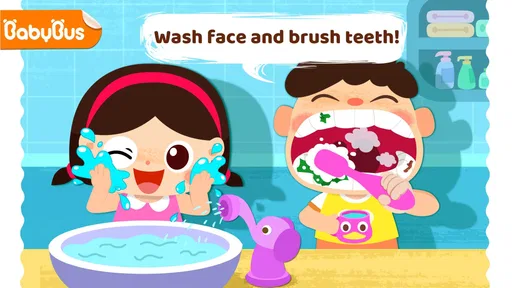
The same approach works with toothbrushing. Instead of turning brushing into a daily argument, I would play briefly at a calm time, then refer back to the activity when the real toothbrush comes out. The game becomes a reminder and a shared reference point. In my experience, that is more useful than handing a child a device during the rushed morning routine, when there is little time to explain anything.
Why the routine-based design helps
Many children’s games reward quick reactions, collecting items, or completing a story. This one has a different purpose. Its subject matter gives parents a natural reason to join in, because the activities relate to things a child actually has to do. That makes it easier to turn screen time into a short conversation rather than an isolated distraction.
I also like that the themes are broad enough to support more than one age group within the stated audience. A younger child may simply follow the pictures and copy the character. An older child can talk about why washing, brushing, or changing habits matters. The same activity can therefore be used at different levels, although parents should not expect the game to become substantially more complex just because the child grows older.
A practical tip is to choose one routine at a time. If a child is struggling with brushing, I would focus on that rather than opening every activity in one sitting. The game contains several everyday topics, but presenting them all together can make the experience feel like a lesson. Short, repeated sessions are more likely to help than a long play session followed by no real-world practice.
Another useful workflow is to play before a transition. A child who resists washing before dinner may benefit from seeing the routine earlier in the afternoon, when there is no pressure to hurry. Then the parent can use a simple phrase such as “let’s do it like we practised.” This is a better use of the app than trying to negotiate while everyone is already late.
Where it fits beside ordinary alternatives
The usual alternatives are picture books, songs, parent demonstrations, and short videos. Books can be better when a child enjoys listening and wants a slower story. A parent demonstration is more accurate for explaining the child’s own bathroom, sink, toothbrush, or clothing. Songs can be more effective for children who remember rhythm. The advantage here is that the child can interact with the routine instead of only watching or hearing about it.
That advantage has limits. A real demonstration can respond immediately to a child’s question, while the game offers a prepared experience. A book may also be easier to use at bedtime because it does not bring the same temptation to continue tapping and playing. I would choose this game when the child needs visual participation, and choose a book or direct practice when the child is already ready to follow instructions.
The app is free to start, which makes it easy to try without committing to a purchase. Optional in-app items range from $0.99 to $4.99 each. I would let the child explore the available experience first and decide whether it genuinely improves your routine before buying anything. For a family that wants a single, comprehensive learning platform, a broader educational subscription may offer more variety, but it may also be less focused on personal-care habits.
The weakness parents should understand
The main limitation is that routine learning can become repetitive. Repetition is useful for a three-year-old who needs the same sequence many times, but an older child may quickly feel that the activities are too basic. The game is strongest as a starter, a refresher, or a way to open a conversation. I would not choose it as the main educational game for a child who already manages these habits independently.
There is also a risk of confusing game success with real-life success. A child may happily complete an on-screen activity and still resist brushing or washing afterward. That is not a failure of the child or necessarily of the game; the two situations are different. The screen removes discomfort, time pressure, and sensory details. Real routines include toothpaste taste, water temperature, bathroom sounds, and the need to stop playing. Parents should treat the app as rehearsal, not evidence that the habit has been learned.
To avoid that problem, I would always follow a play session with one small real action. After a brushing activity, the child could choose the toothbrush. After a washing activity, the child could turn on the tap with help. After discussing toilet training, the parent could simply visit the bathroom together without demanding immediate success. This bridge from screen to life is where the app either becomes useful or remains just another distraction.
Another point is the need for adult involvement. The game is designed for children, but some of its best value appears when a parent asks questions and connects the activity to the child’s day. If you expect to hand over the phone and walk away, the educational effect may be modest. That may be inconvenient for busy families, but it is also honest: habits are formed through real repetition, not through an app alone.
How I would use it with different children
For a child who is anxious about toilet training, I would use the game privately and without a deadline. I would let the child watch, ask whether anything looks familiar, and avoid turning the activity into a test. If the child becomes uncomfortable, I would stop. The app should lower tension, not create another performance expectation.
For a child who refuses toothbrushing, I would use it as part of a choice-based routine. The child might choose whether to play before or after getting dressed, then choose between two toothbrushes in real life. This gives the game a supporting role while preserving the child’s sense of control. I would avoid promising a reward every time, because that can make the routine dependent on the device.
For siblings of different ages, I would not assume the same session will suit both. A younger child may need to tap through the activity slowly, while an older child may prefer to explain what is happening. Letting the older child “teach” the younger one can make the experience more engaging, but parents should watch for teasing or impatience. The game is better as a shared prompt than as a competition.
For children who are already independent with hygiene, I would probably skip it unless they enjoy BabyBus characters or want a very simple casual game. There are more challenging educational choices for practising reading, problem-solving, numbers, or creative skills. Its focus is narrow by design, and that is both its strength for beginners and its weakness for advanced learners.
Practical details before installing
The game is free and has more than fifty million installs, while its average rating is 3.5 from around seventeen thousand ratings. I read that combination as a sign of broad reach rather than a guarantee that every family will enjoy it. A large audience can include very different expectations, and the middling average suggests that some users may find the experience too simple or encounter friction that does not affect every child.
It has received ninety-six written reviews, and the current version is 8.76.00.00. The app requires Android 6.0 or later. Those details are worth checking before installing on an older family device, particularly if the phone or tablet is shared with other children. On a compatible device, I would still test the opening experience myself before giving the child unrestricted access.
Because the content is aimed at young children, I would set clear boundaries around when the device is available. A short session connected to a real habit is more valuable than leaving the game open throughout the day. If your child tends to move from one activity to another and resist stopping, use it before the routine rather than as a reward after the routine. Otherwise, ending the game may become a new argument.
I would also keep expectations realistic about age. The stated range reaches from three to eight, but those years cover major differences in language, independence, attention, and emotional development. A preschooler may need you to narrate every step. A child near the upper end may only enjoy it occasionally. The game can remain relevant when a child is learning a new habit, but age alone does not determine whether it will feel engaging.
Who should choose it, and who should pass
I recommend it most to parents who want a calm visual aid for toilet training, brushing, washing, and basic daily routines. It is especially suitable when a child likes familiar characters, learns through imitation, or needs a less direct way to talk about personal care. It can also help grandparents, babysitters, and older siblings start the same conversation when they are supporting a child through a new routine.
I would be more cautious if your priority is deep educational content, long-term challenge, or a wide range of subjects. This is not the right choice for a child looking for complex puzzles or an expanding curriculum. It is also not ideal for families that prefer completely screen-free habit training; a picture book, role-play with toys, or direct demonstration may fit your values better.
Parents should also skip it as a substitute for professional guidance when a child has persistent distress, pain, or unusual difficulty with a routine. A game can make conversation easier, but it cannot assess a health concern or tailor advice to a child’s individual situation. In those cases, the useful next step is a qualified professional, with the app used only if it remains comfortable and appropriate.
My final view after using it
The best way to think about Baby Panda's Daily Habits is as a rehearsal tool, not a digital babysitter. It takes ordinary personal-care moments and gives young children a friendly visual context for them. That can be genuinely helpful when a parent needs to introduce a routine, reduce embarrassment, or make a repeated explanation feel fresh.
Its free entry point makes experimenting easy, and BabyBus has kept the focus clear rather than filling the experience with unrelated lessons. The trade-off is simplicity. Children who need more challenge may leave quickly, and families expecting the app to solve resistance without adult participation may be disappointed.
My recommendation is to try it with a specific goal: choose one habit, play briefly, talk about what happened, and practise one matching action away from the screen. If that process helps your child approach the routine with less hesitation, the game has earned its place. If your child already manages daily habits or prefers books, songs, and hands-on play, you will probably get more from those alternatives.
Overall, I see this as a focused educational game for early habit-building rather than a complete learning package. Used thoughtfully, it can turn a difficult conversation into a shared activity and give a child a simple pattern to remember. Used without follow-through, it is likely to remain pleasant screen time with only a small effect on everyday behaviour.
Verdict
Strengths of Baby Panda's Daily Habits
- Simple routines help young children learn healthy daily habits.
- Bright animations and friendly characters keep preschoolers engaged.
- Short activities are easy to complete without long play sessions.
- Interactive tasks encourage basic independence and responsibility.
- Child-friendly design uses simple controls and accessible visuals.
Limitations of Baby Panda's Daily Habits
- Content may feel repetitive once children master the activities.
- Limited challenge makes it unsuitable for older children.
- Some activities may require adult guidance to explain routines.
- Educational value is focused mainly on basic everyday behaviors.
- In-app prompts or ads may vary by device and app version.
Other Releases by BabyBus
View All
Little Panda Policeman
Educational4.0

Little Panda's Chinese Recipes
Educational4.4

Little Panda's Restaurant
Educational4.4

Little Panda's Ice Cream Games
Educational4.3
Similar Picks in This Category
View AllLittle Panda Policeman
BabyBus4.0

Monster Trucks Game for Kids 2
Raz Games4.1
Little Panda's Chinese Recipes
BabyBus4.4
Little Panda's Restaurant
BabyBus4.4
Little Panda's Ice Cream Games
BabyBus4.3

Baby Panda Care
BabyBus3.8
Frequently Asked Questions
What is Baby Panda's Daily Habits?
Baby Panda's Daily Habits is an educational game for young children that introduces everyday routines through colorful scenes, simple interactions, and friendly characters. Children can explore activities such as waking up, brushing their teeth, washing, eating, getting dressed, and going to bed. The app is designed to make basic self-care habits feel entertaining and easy to understand.
What age group is Baby Panda's Daily Habits suitable for?
The game is mainly intended for preschool children, generally around ages two to five, although younger or older children may also enjoy its simple activities. Instructions are visual and straightforward, so children do not need advanced reading skills. Parents should still choose activities according to their child’s development, as attention span and independence can vary considerably.
Does Baby Panda's Daily Habits require an internet connection?
Most of the interactive daily-habit activities can usually be enjoyed after the game has been installed, which is convenient for travel or offline play. However, certain features may depend on the version, device, or publisher configuration and could require internet access, particularly updates, advertisements, or additional content. It is best to download and open the app once while connected.
Is Baby Panda's Daily Habits safe for children?
The game is created for young children and uses gentle cartoon visuals, simple tasks, and non-violent gameplay. Nevertheless, parents should review the app’s current privacy, advertising, and in-app purchase settings before handing over the device. Using parental controls and playing together at first is recommended, especially because policies and features can change after updates.
Is Baby Panda's Daily Habits free to download and play?
Baby Panda's Daily Habits may be available as a free download, but the exact experience can depend on the Android or iOS version and the publisher’s current business model. Free versions may include advertisements, optional purchases, or limited content. Before downloading, parents should check the store listing for pricing, permissions, supported devices, and any purchase requirements.
Play our best games!


